SAP
Down the Data Design Rabbit Hole @ SAP
Jun 2025 - Present
5 min read
Role
UX Designer
Jun 2025 - Present
5 min read
In a nutshell
I'm currently interning on the SAP Data and Analytics (DNA) Design team, designing new and existing visualization-building features for SAP Analytics Cloud (SAC).
SAC is an enterprise B2B SaaS platform that enables organizations to analyze data, build dashboards, and deliver predictive insights at scale.
My role involves working across all stages of the design and development process—from early exploration to design handoff.
In the past 7 months, I have:
- Led design elaboration and handoff process for new chart features, collaborating with developers and PMs to align requirements with technical implementation
- Designed workflows for new visualization-building capabilities, translating ambiguous requirements into scalable solutions within an enterprise design system
- Conducted concept validation interviews with users and synthesized research into actionable insights that informed product decisions and feature prioritization
- ...and more
Most of my work is currently under NDA — feel free to reach out on Linkedin or at samanthayeung0430@gmail.com if you have any questions!
Key Learnings
1. Building Clarity from Complexity
When things get messy at enterprise scale (which is often), I've learned to create frameworks that help me think through problems systematically. Logic matrices, flowcharts, tables—whatever helps me take all possible states into account and ask the right questions. It's about building structure that pinpoints the exact unknowns, surfaces constraints, and establishes a shared source of truth.
2. Stress-Testing for Scale
Working in a large, complex product has taught me that designs need to hold up beyond the ideal happy path. I make a point to look for edge cases, test where things might break, and account for the less obvious workflows I've seen come up in user research and feedback. If a solution can't scale across different contexts and constraints, it's not really a solution yet.
3. Knowing When to Prioritize Speed vs. Precision
I've learned to adjust my design approach based on where we are in the process: rough and exploratory early on, refined and detailed closer to handoff. Matching effort to the project phase prevents over-investing in ideas that might pivot and under-delivering when it matters most.
4. Communication as a Design Skill
Good communication is about three things: organization, context, and speed. I structure my files so teammates can jump in, understand the thinking, and give feedback more easily. I overcommunicate context because what feels repetitive to me is new information to someone else. And I've learned to share ideas often, quickly, and precisely. Being concise isn't about saying less, it's about saying what matters.
And More
Impulse 25 Vancouver
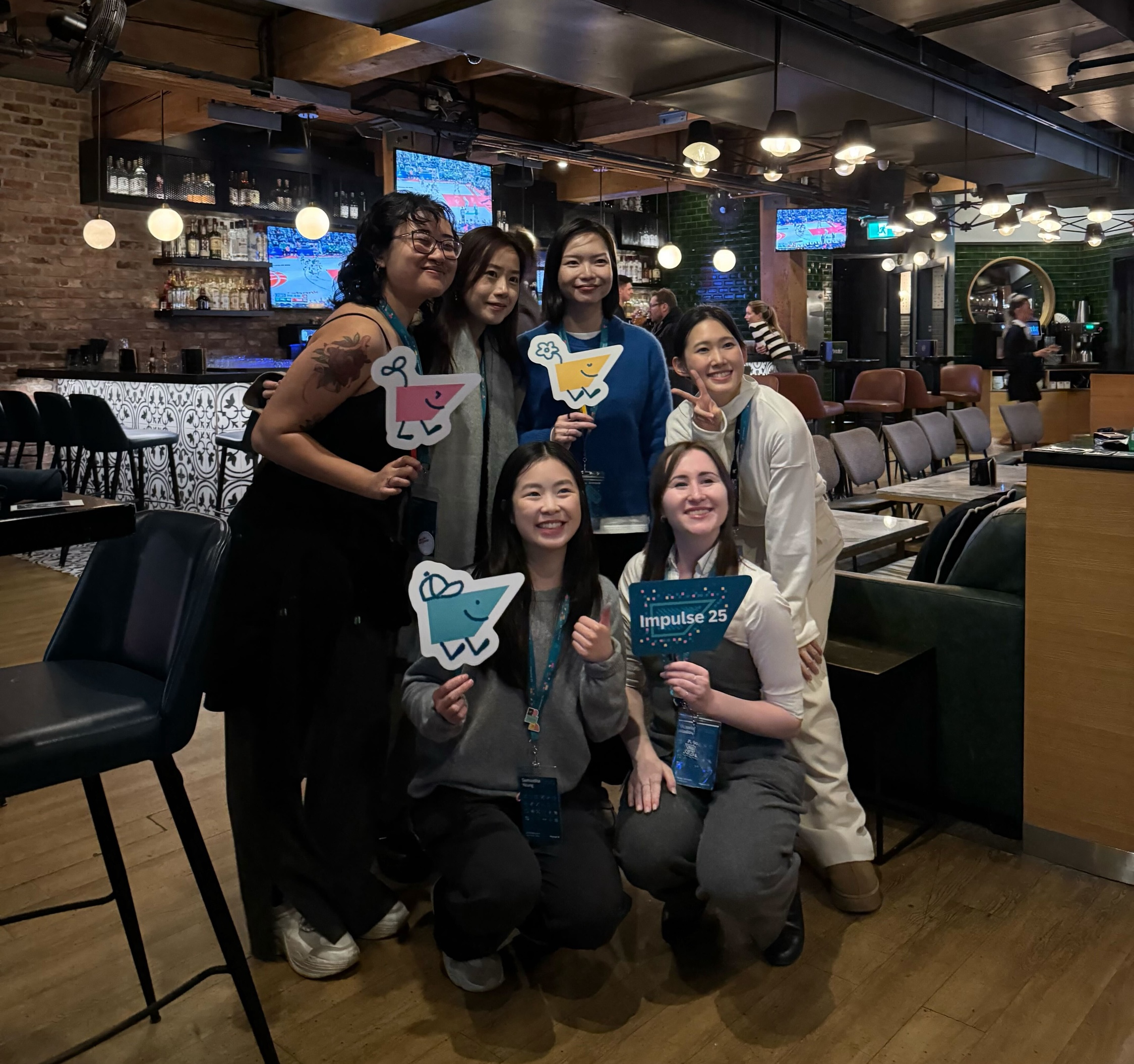
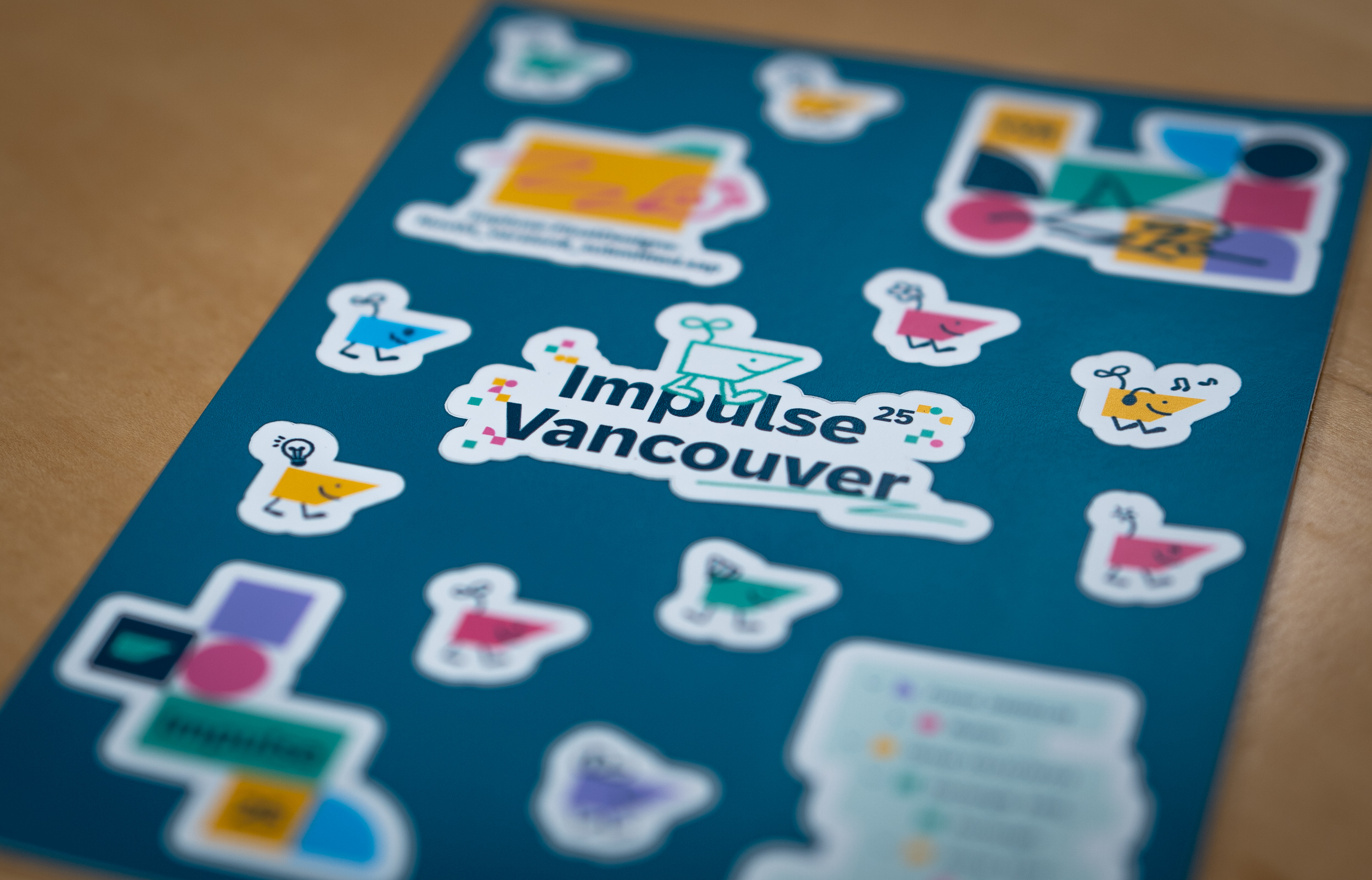
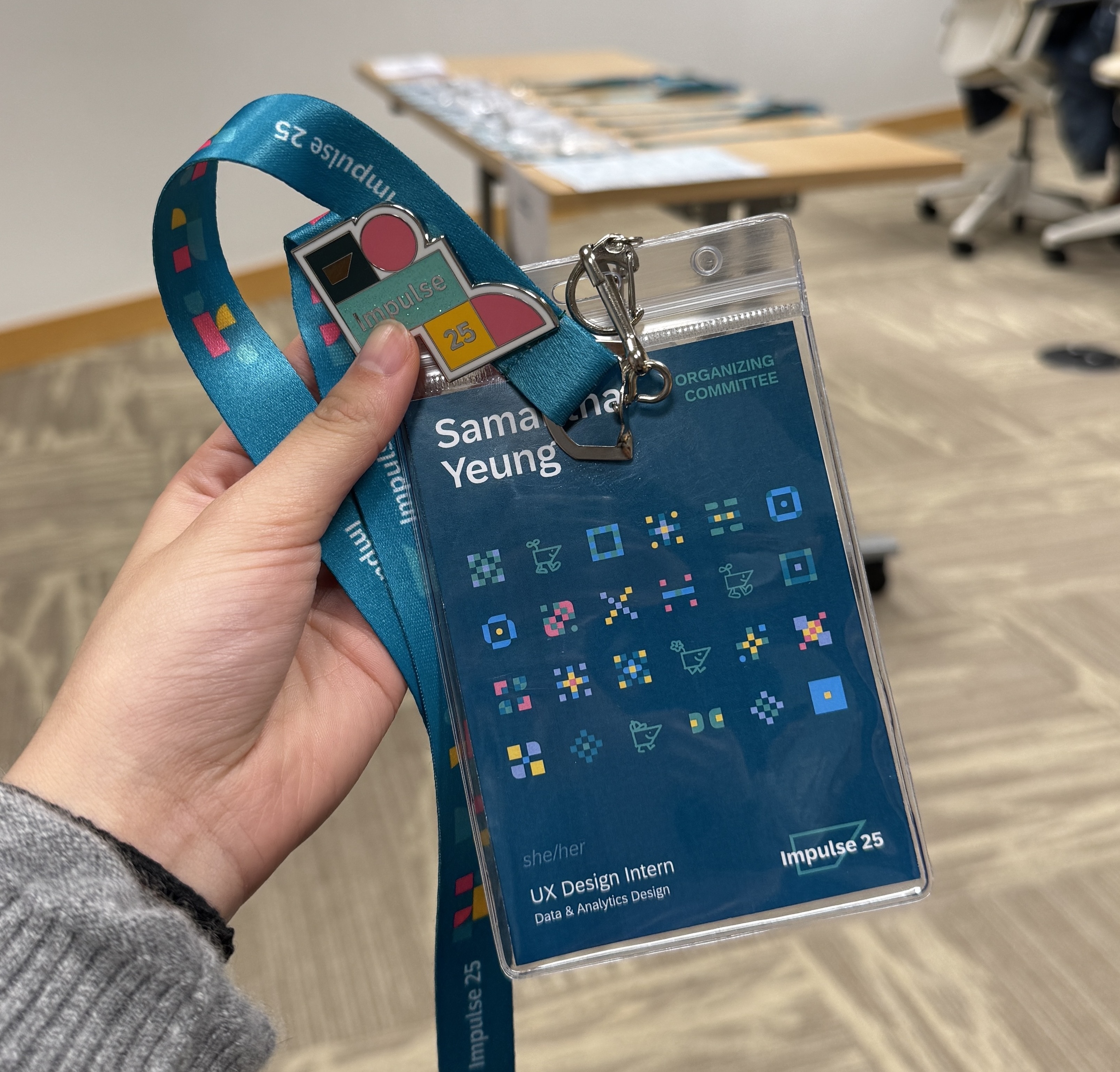
I created an extension of the existing design language and designed the event merchandise and freebies for Impulse 25, SAP's community-led design festival. My work helped brand the experience for 40+ designers and UA writers from Vancouver and Montreal. An absolute blast seeing everything come together! Peep our mascot Sappy, inspired by this little guy (thanks Priscilla for the idea to include it!).